Restaurant table turn-time and seating utilisation
· Updated · Slinai
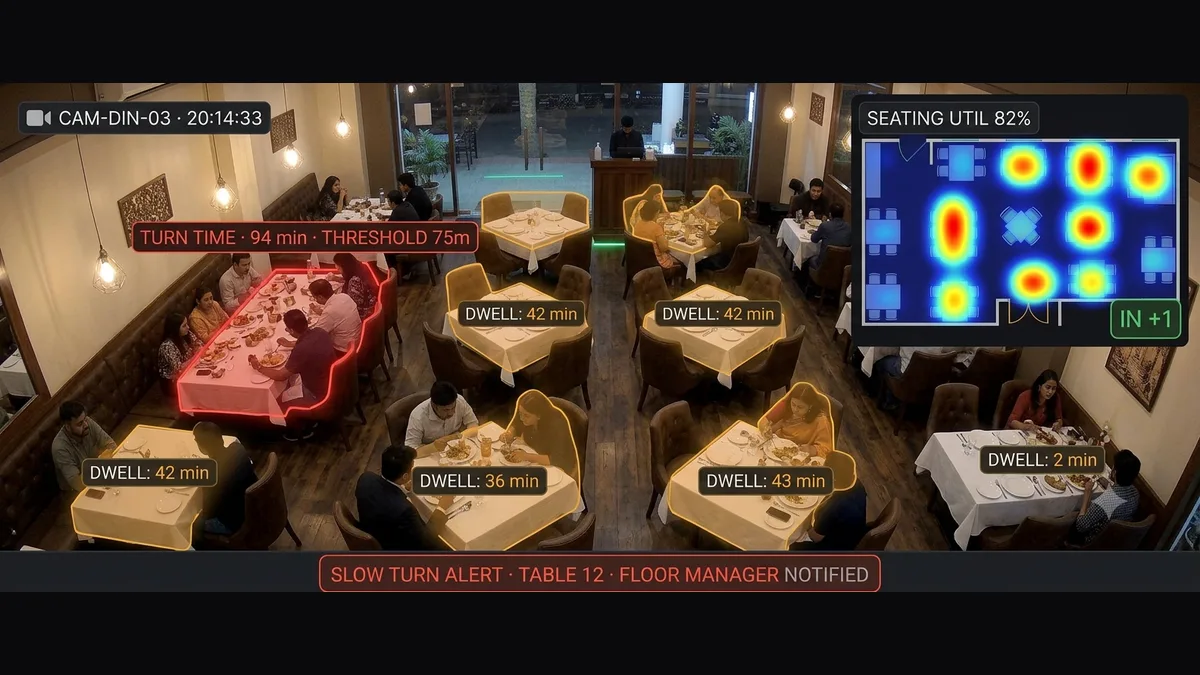
Key facts
| What it measures | Dwell per table zone, seating utilisation, peak bottleneck tables |
|---|---|
| Action | WhatsApp clip when a table exceeds the meal-period SOP |
| How to prove it | Record turn-time per table zone in week one, then compare after the floor has acted on alerts for a month |
| Not this post | Kitchen SOP, FSSAI PPE, POS voids, aggregator shelves — sibling posts |
| Hub | Restaurants & QSR video analytics |
A four-top that sits twenty minutes after the last plate is not a “nice evening.” It is a cover you will not sell.
Restaurant queue management covers the host stand and counters. This post is the floor: how long each table zone is occupied, which seats are empty in peak, and when a manager should walk. Slinai does it on existing CCTV under operations & productivity. The industry hub is restaurants & QSR video analytics.
What to measure (and what to leave to other posts)
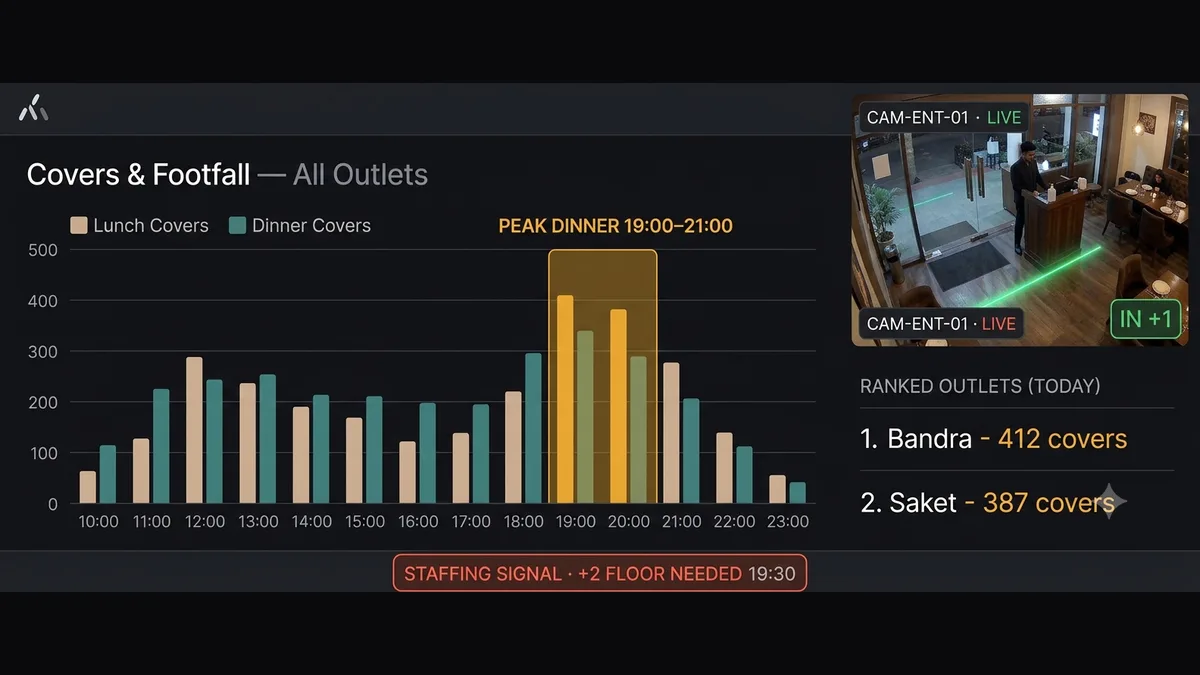
| Metric | Use | Leave to |
|---|---|---|
| Dwell per table zone | Slow-turn walk | — |
| Utilisation % | Dead corners vs window seats | Layout / VM conversation |
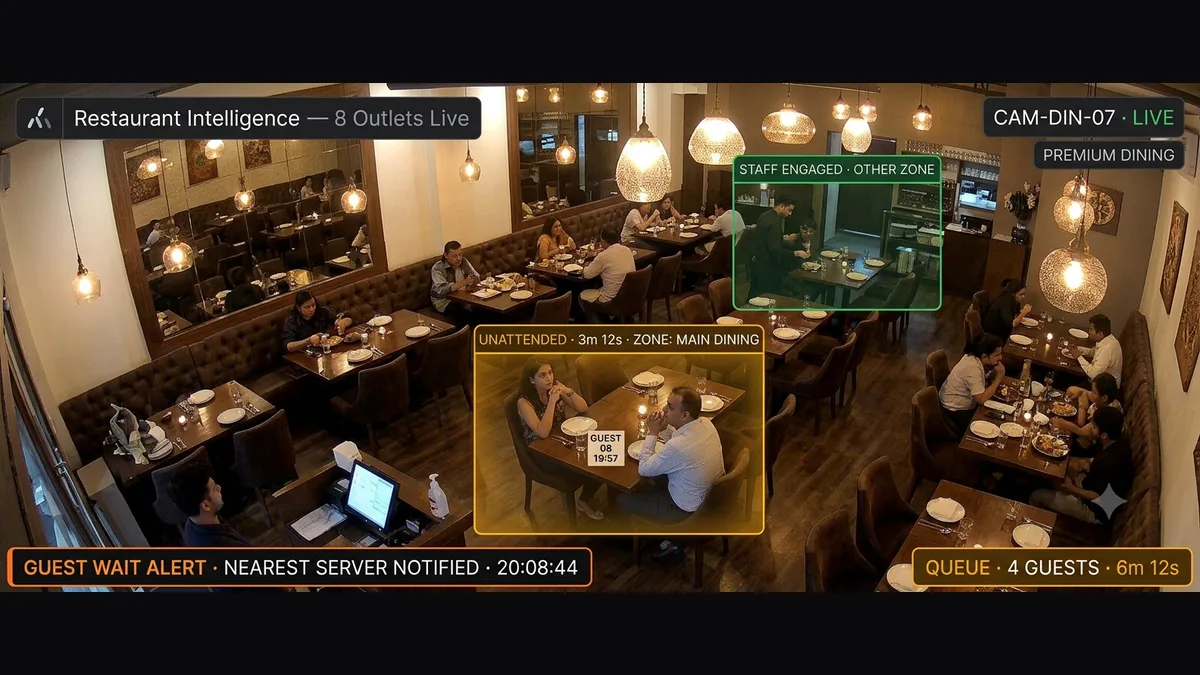
| Time-to-water / unattended | Service gap | Guest-service alerts on the hub |
| Host wait | Parties standing | restaurant queues |
| Pass speed | Kitchen holding the floor | Kitchen SOP + pass on the hub |
Write one SOP clock per meal period. A 90-minute Saturday tasting menu is not a 35-minute weekday lunch. If HQ publishes one number for every brand, area chefs will ignore the alert.
Camera rules that decide whether the number is honest
- Prefer high dining-room views that see tabletops, not a bar selfie camera.
- Draw polygons per section (window, booth, high-top) if SOPs differ.
- Exclude the waiter station or you will count trays as parties.
- Banquet and private rooms are different products — do not average them into à-la-carte turn.
Same rule as retail footfall: one job per view.
How a floor manager actually uses the clip
The useful alert is not “table 14 is occupied.” It is “table 14 is 8 minutes past lunch SOP — check — clip.”
Then the human decides: dessert in progress, missing bill (POS fraud if the till is the delay), or a server stuck on aggregator pickup.
Turn-time only moves if someone clears and reseats. Measure your own baseline in week one and compare after a month of acted-on alerts. Analytics without a host is a heatmap screensaver.
Multi-outlet benchmarking without lying
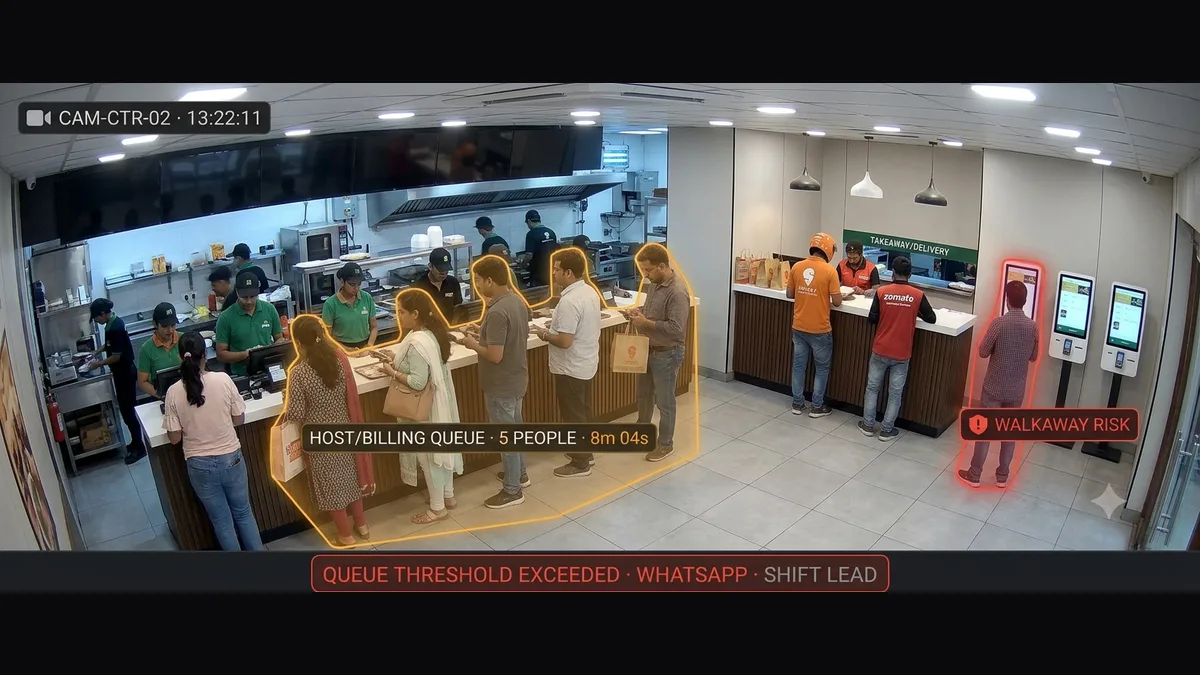
Compare like format and like daypart. A hotel coffee shop will “lose” to a 40-seat QSR if you rank raw minutes.
Ask the agentic layer: “Which outlet had the slowest dinner turns yesterday?” Demand a clip, not a rank.
How this ties to Slinai
- Hub: restaurants & QSR
- Labour twin: operations & productivity
- Cluster: kitchen hygiene / FSSAI, POS billing, aggregator handoff
Book a demo on a Saturday dining-room camera. Bring the unofficial “how long is too long” number for lunch and dinner.
Common questions
Is this the same as host-stand queue analytics?
No. Queues measure people waiting to be seated or billed. Turn-time measures how long a seated party occupies a table. You can have a short host line and still lose a turn on a four-top.
Do I need a camera on every table?
No. Overhead or high dining-room views that can resolve table polygons are enough. Private dining and banquet rooms need their own view if they have a different SOP.
Will guests be identified?
No. Slinai counts occupancy and dwell by zone. Facial recognition is off by default.
What turn-time should we set?
Write it per format and meal period — café lunch is not tasting-menu Saturday. Alert a few minutes before the SOP, not after the next party has already left.
How does this tie to covers?
Faster honest turns raise covers only if the host can reseat. Pair turn-time with host-queue visibility from the QSR seed guide.
Related pages
Guides in this cluster point to live product, industry and use-case pages.
Related guides
Restaurant queue management: host stand to takeaway
Restaurant queue management on existing CCTV: time host-stand parties, billing and takeaway counter waits, and catch walkaways before guests leave.
Kitchen hygiene and FSSAI video analytics for restaurant chains
Kitchen hygiene and FSSAI video analytics watches hairnets, gloves and wash stations on existing CCTV — evidence between inspections, not a licence replacement.
Restaurant POS billing fraud on existing CCTV
Restaurant POS billing fraud analytics joins voids, discounts and drawer opens to counter CCTV — exceptions the night they happen, not at month-end.