Machine proximity and restricted zones on factory CCTV
· Updated · Slinai
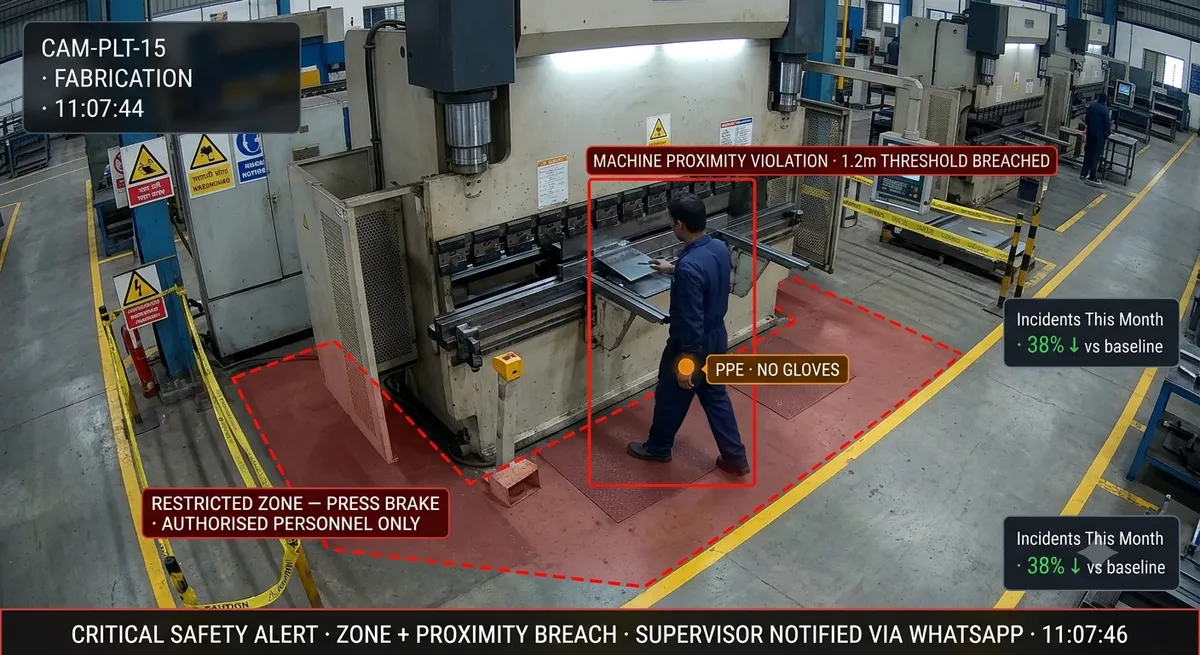
Key facts
| What it measures | A person crossing or dwelling inside a marked machine or storage danger zone |
|---|---|
| What it does not do | Stop the machine, replace a light curtain, or score helmet and gloves |
| Draw the zone on | The floor marking that already exists — press, robot cell, chemical store, high-voltage bay |
| Hub case-study | 38% fewer safety incidents cited when plants act on zone alerts — validate in UAT |
| Sibling | PPE compliance is what they wear; this is where they stand |
A hard hat does not make the press safe. The breach is the body inside the marked zone.
PPE compliance answers “is the kit on?” This post answers “are they inside the danger area?” Slinai draws the polygon on existing CCTV and alerts under safety & compliance. The zone tool is perimeter and restricted zones. Hub: manufacturing video analytics.
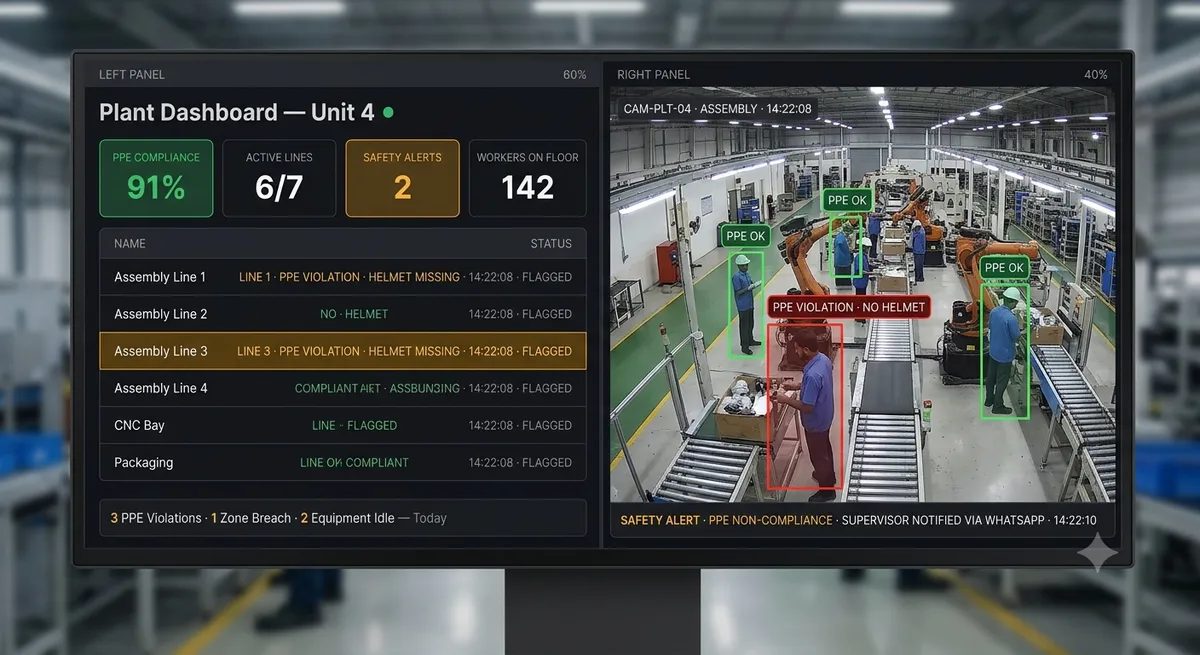
Draw the zone the floor already believes
| Zone | Draw it on | Wrong zone |
|---|---|---|
| Press or robot cell | The painted keep-out, not the whole bay | One dome asked to watch every machine |
| Chemical store | The door threshold and the marked pad | A heatmap of the aisle |
| High-voltage bay | The barrier line | “Anyone on this camera” |
| During setup or changeover | A scheduled window, or authorised dwell gets alerted all shift | Leaving the rule armed with no exception |
Calibrate to the floor marking. A polygon that floats above the real line trains supervisors to mute WhatsApp.
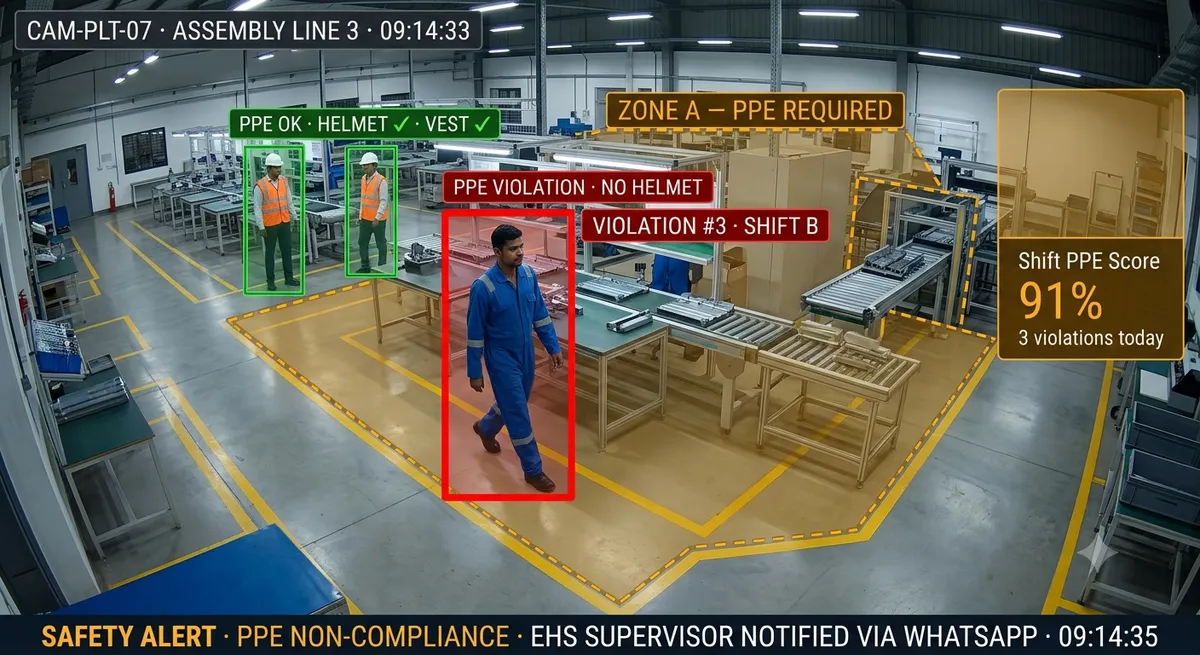
What the supervisor does with the clip
- Alert the cell lead who can walk now, not a weekly EHS digest.
- Name the machine and the minute. Do not name a person.
- Treat it as a near miss even when nobody is hurt.
- If the same polygon fires all shift, the line is drawn wrong or the job requires people inside it. Fix the rule. Do not coach the worker for a bad polygon.
Agentic question that fits: “Which cell had a proximity breach on B shift?” If the answer is a helmet miss with no zone, you opened the wrong guide.
The industry page cites a 38% reduction in safety incidents when plants act on zone and proximity alerts. That is a case-study figure. It is not a promise, and it assumes the light curtain is still there.
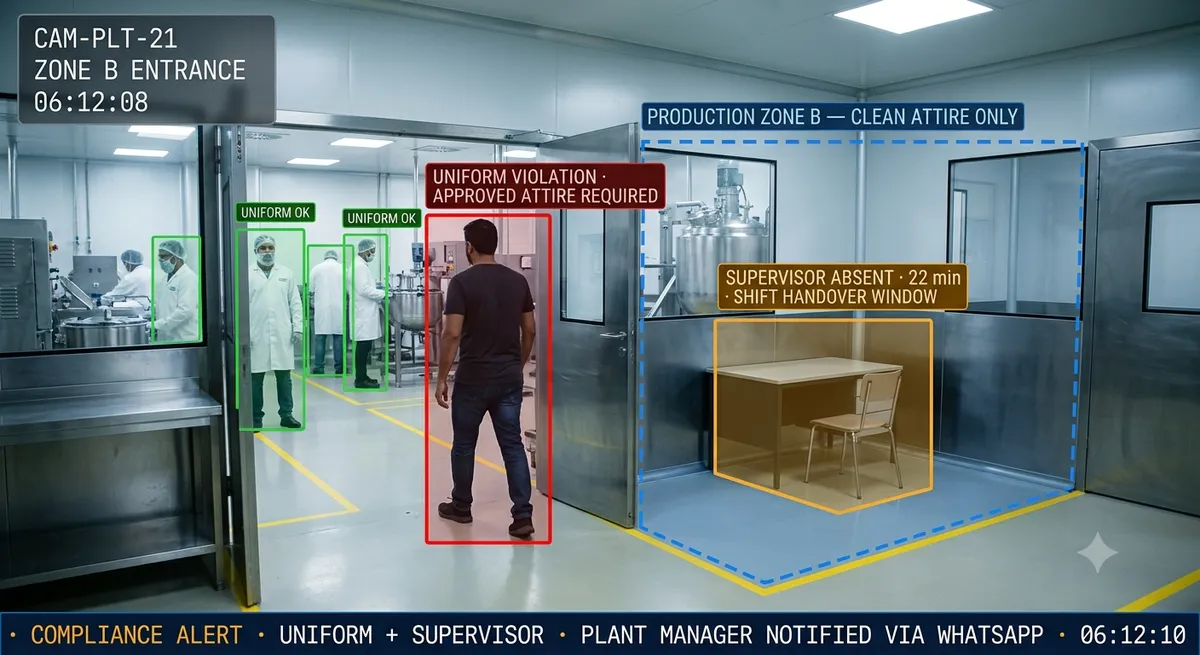
What this is not
- Not PPE. Kit and position are different failures.
- Not line throughput. A stopped station is output. A body in the cell is safety.
- Not plant perimeter. The fence is outside. This polygon is around the machine.
- Not a second copy of the industry page. The hub lists the module. This guide is how to draw the keep-out so EHS does not argue with production.
Book a demo on one press or robot camera and the floor marking that already defines that cell.
Common questions
Is this the same as PPE compliance?
No. PPE asks whether the helmet, vest, gloves, or shoes are on. Proximity asks whether the person is inside the marked danger zone. A fully kitted worker at a press is still a breach.
Does the camera stop the machine?
No. Light curtains, interlocks, and lockout stay on the machine. Slinai sends a clip so a supervisor can intervene. Do not remove a guard because a polygon exists.
How close is too close?
Draw the polygon on the floor marking the plant already uses, then tune false alerts in UAT. A camera cannot invent a safe distance the EHS team has not marked.
Do we name the worker?
No. The alert is the zone and the clip. Identity and discipline stay with EHS. Facial recognition is off by default.
What about the plant fence?
That is perimeter intrusion, a different guide. This post is the danger zone on the floor, around the machine.
Related pages
Guides in this cluster point to live product, industry and use-case pages.
Related guides
Manufacturing PPE compliance on existing CCTV
Manufacturing PPE analytics flags missing helmets, vests, gloves and shoes on existing factory CCTV — clip alerts for supervisors, not audit-day theatre.
Factory line throughput and station bottlenecks
Factory line throughput analytics shows which station stopped the line on existing CCTV — idle time and pile-up, not PPE or defect inspection.
Plant perimeter and boundary intrusion on existing CCTV
Plant perimeter analytics flags fence, gate, and yard intrusion on existing exterior CCTV — before someone reaches the factory floor.